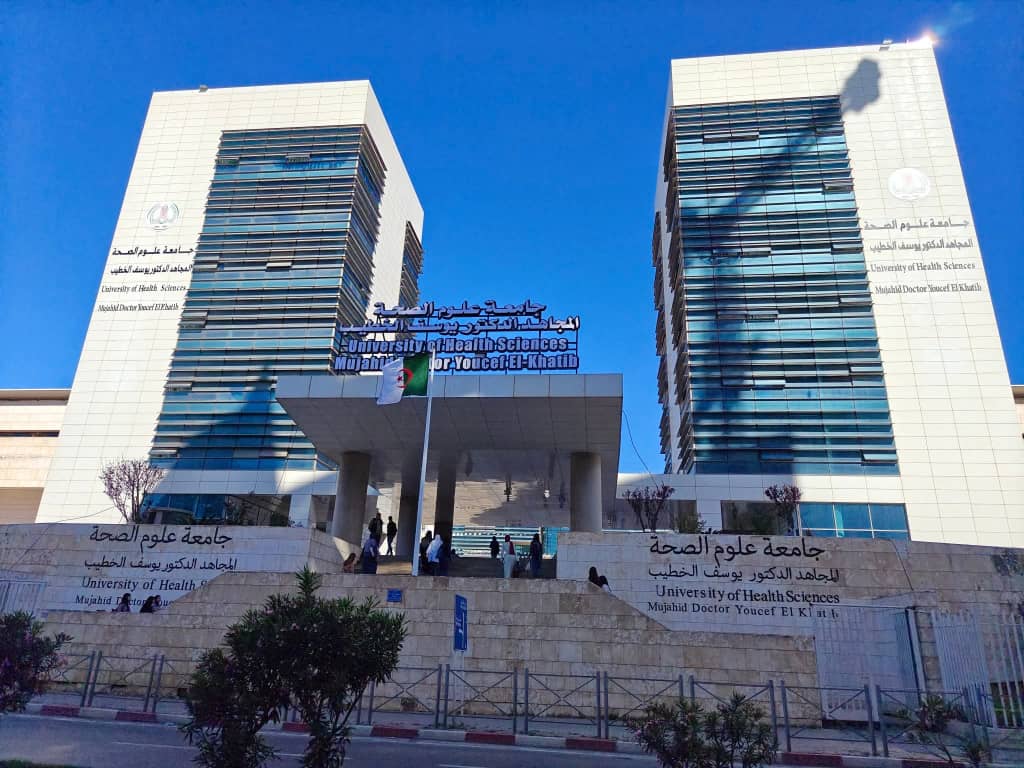
University of health sciences
University of health sciences
Presentation
The first University of health sciences in Algeria
This concerns Executive Decree No. 24-320, dated 27 Rabi’ al-Awwal 1446, corresponding to October 1, 2024, establishing the University of Health Sciences and amending Decree No. 84-209, dated 21 Dhu al-Qi’dah 1404, corresponding to August 18, 1984, relating to the organization and operation of the University of Algiers
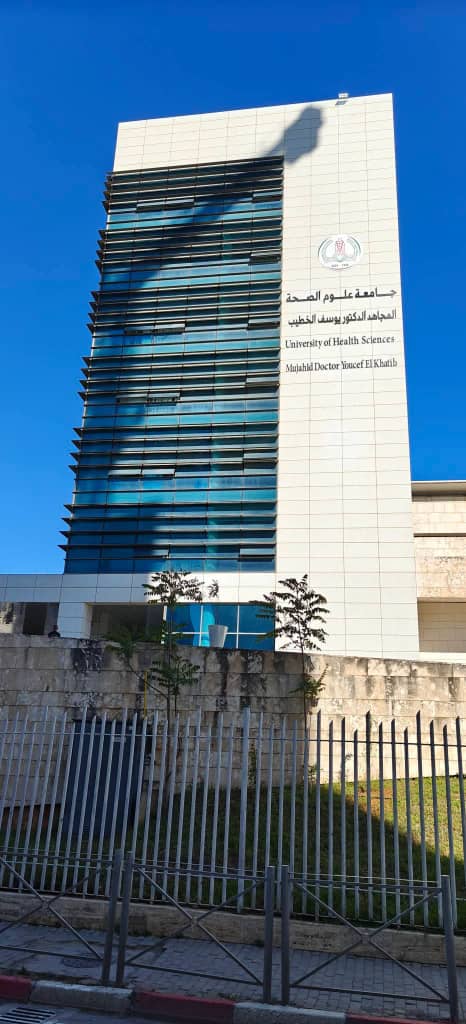
The faculties of medicine, pharmacy, and dentistry are distributed across four well-known locations in Algiers. The most important is the new Faculty of Medicine in Ben Aknoun (Ziania), a modern campus built during the first decade of this century. The second location is in the municipality of Algiers Centre, known as La Perrine. The third is located at the University of Algiers 1 campus, where pharmacy students mainly study and which also houses a historic anatomy museum dating back to the colonial period. It is worth noting that this is the first time in Algeria’s history that a university dedicated exclusively to health sciences has been established
Future prospects
The University of Health Sciences “Mujahid Dr. Youcef El Khatib” in Algiers represents a strategic step toward modernizing medical education and integrating fourth-generation university concepts with artificial intelligence. The university focuses on developing specialized fields, such as industrial pharmacy and emergency medicine, utilizing advanced simulation technologies, and aligning training with the needs of the national market to produce highly qualified healthcare professionals
Key new developments in education at the University of Health Sciences:
- A fourth-generation university: Based on smart governance and digitalization, it incorporates cutting-edge technologies such as 3D anatomy tables and simulation centers.
- Introduction of new specializations: Specialized fields such as Emergency Medicine and Industrial Pharmacy, including radiopharmacy, medical supplies, and pharmaceutical production, have been introduced to meet market demands.
- Integration of artificial intelligence: Artificial intelligence will be incorporated into the curriculum through the establishment of an AI Unit and the introduction of double-specialization programs aimed at enhancing students’ skills.
Additional information
- Admission requirements: Previously high admission averages were maintained, reaching up to 16 out of 20.
- Scholarships: The Ministry announced an increase in the value of scholarships for medical science students starting in 2025.
- Continuing education: Practical workshops, such as digital dentistry training, have been organized to enhance students’ practical skills.